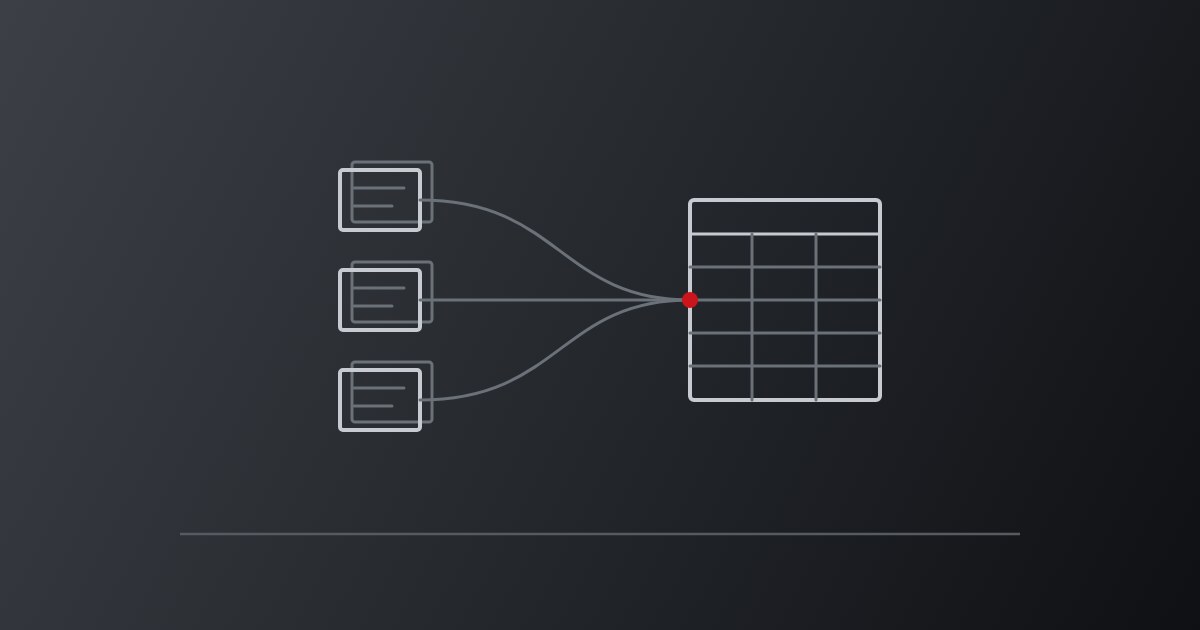
Most Australian SMEs do not have one accounting system. They have an accounting package plus the four or five places that feed it: a spreadsheet for job costing, a separate tool for inventory, a CRM holding the real pipeline, and someone's workbook that turns all of it into a board pack. Consolidating finance into Odoo means those feeds stop being feeds and start being the same ledger.
This page covers what consolidation actually removes, what it does not fix, how multi-entity groups work, and what to do first.
What does a disconnected finance function cost?
Time at month end, and confidence the rest of the month.
The time is measurable. A finance team running three systems plus spreadsheets typically spends the first week of the month reconciling rather than reporting, because the figures have to agree before anyone can use them. That week is not accounting work. It is data entry and investigation.
The confidence is harder to price. When two reports disagree, the question becomes which one to believe, and the answer is usually whichever one the person asking trusts most. Decisions get made on the number that was available rather than the number that was right.
The common pattern looks like this:
- Sales sit in a CRM, invoices in the accounting package, and the two reconcile monthly rather than continuously.
- Stock value comes from an inventory tool and is journalled across as a single figure nobody can decompose.
- Job or project profitability is calculated in a spreadsheet, using labour costs typed in by hand.
- Intercompany transactions between entities are eliminated manually, in a workbook, by one person.
What does consolidating into Odoo actually change?
The transactions stop being copied.
In a consolidated build, the invoice is created from the sales order, the stock movement that fulfils it posts its own cost of goods sold, and the project it belongs to carries both. There is no step where a number leaves one system and is re-entered in another, which is where differences come from.
What that produces, practically:
- Continuous reconciliation. Stock value in the ledger equals stock on hand by value, because they are the same records rather than two counts.
- Margin at the level you sell. By product, customer, channel or job, without a workbook, because the cost sits on the transaction.
- Bank feeds against real invoices. Australian bank feeds reconcile against invoices that already exist, rather than creating them.
- One audit trail. A figure on a report can be opened down to the source document, which is the test of whether a report can be defended.
Odoo Accounting handles GST and BAS through the Australian localisation, with Single Touch Payroll Phase 2 available where payroll runs in the same system.
How do multi-entity groups work?
As separate companies inside one database, sharing what should be shared.
Each entity keeps its own chart of accounts, its own BAS and its own statutory reporting. Products, customers and suppliers can be shared so a group is not maintaining four copies of the same catalogue. Users switch between companies without logging out, and a user can be given access to one entity or several.
Intercompany transactions can be configured to post both sides, so a sale from the operating entity to the retail entity creates the matching purchase automatically. That is the step most often done by hand, and the one most often found wrong at year end.
Consolidated reporting then runs across entities without the eliminations being rebuilt each month.
What does consolidation not fix?
Four things worth saying plainly.
It does not fix a chart of accounts that was never designed. Consolidating onto a bad structure gives you faster access to figures you still cannot use. The chart is the part that is expensive to change afterwards, which is why it goes first. See Why Your Odoo Implementation Should Start with the Chart.
It does not fix bad data. Four versions of the same customer become four versions inside one system. See Clean Data, Clean Start.
It does not replace an accountant or a CFO. It removes the assembly work so the time goes into interpretation instead. If the gap is knowing what the numbers mean, that is a different engagement. See Fractional CFO.
It does not happen in one step. A finance consolidation that tries to move every system at once is the big-bang cutover that makes ERP projects memorable for the wrong reasons.
What should move first?
Core accounting, then whatever feeds it most often.
A sequence that works for most Australian SMEs:
- Chart of accounts and opening balances. Designed against the reporting you actually want, not copied from the old system.
- Accounts receivable and the sales process that creates it. Invoices generated from orders rather than typed.
- Accounts payable and purchasing. Three-way matching against receipts, so a supplier invoice is approved against something.
- Stock, if you hold it. This is where valuation and cost of goods sold stop being a monthly journal.
- Projects or jobs, if you run them. Labour and materials against the job, so margin is a report rather than a calculation.
Each stage goes live on its own and is reviewed before the next is scoped. A business that has done stages one and two is already reporting better than it was, which is the point of staging it that way.
How we work
Ooda Consulting is based in Sydney at Level 6/201 Kent St and works with SMEs across Australia and New Zealand. The Australian team scopes the work and supports it afterwards, with a dedicated senior developer doing the build.
See Odoo ERP Implementation for how a build is scoped and staged, or Outgrowing Xero or MYOB? if you are weighing the move off your current package.
Frequently asked questions
Can Odoo replace Xero or MYOB entirely?
Yes. Odoo Accounting covers GST, BAS and bank feeds through the Australian localisation, with Single Touch Payroll Phase 2 where payroll runs in the same system. The case for moving is rarely the accounting itself; it is everything feeding the accounting that currently lives elsewhere.
Can Odoo consolidate multiple companies?
Yes. Each entity is a separate company with its own chart of accounts and its own BAS, inside one database. Products and customers can be shared, intercompany transactions can post both sides automatically, and consolidated reporting runs across entities.
How long does a finance consolidation take?
It depends on how many systems are being replaced and how clean the data is, not on transaction volume. Staged properly, the first go-live covering the chart of accounts and receivables is usually 8 to 12 weeks, with later stages scoped after each review.
Will consolidating finance reduce our month-end close?
Usually, because most of a long close is reconciliation between systems rather than accounting. Removing the copying removes the differences. What it will not shorten is a close that is long because approvals are slow.
Do we need to move everything at once?
No, and it is better not to. Core accounting goes first, then whatever feeds it most often. Each stage goes live on its own, so the business gets value before the whole programme is finished.
Can we keep our existing payroll or inventory system?
Yes, where it earns its place. The test is whether the integration is cheaper than the duplication it removes. Keeping a specialist system and integrating it is a reasonable answer; keeping it and re-keying between the two is not.